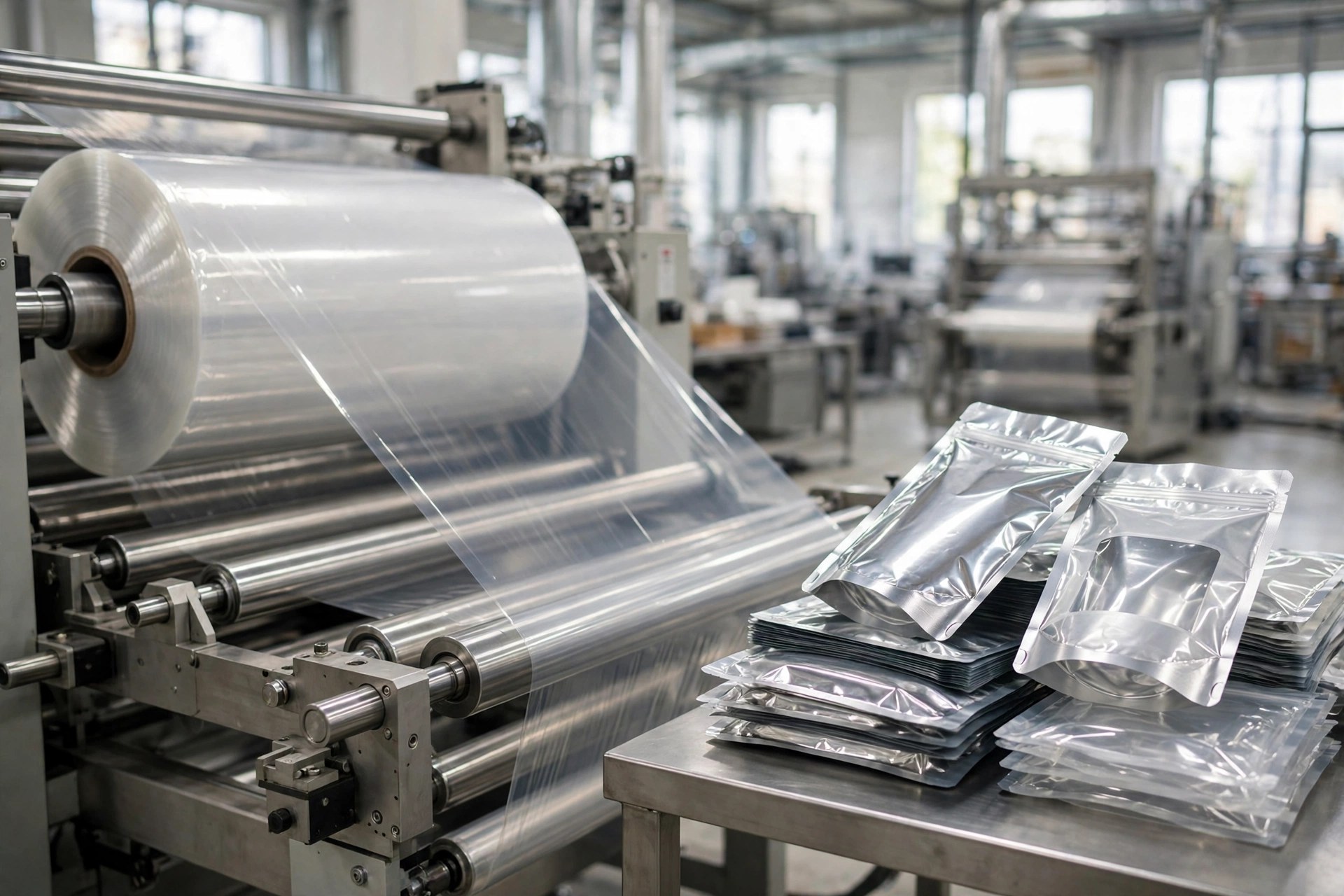
Barrier coatings are the thin layers that keep a bag of coffee fresh for months instead of days. They sit on the surface of a plastic film or a sheet of paper and slow down the things that spoil food — oxygen, moisture, aroma loss, grease and light.
A coating can be thinner than a human hair — a metallized aluminium layer is often only a few tens of nanometres thick — yet it decides whether a pack holds its shelf life or quietly fails on the shelf. That is why the choice of barrier coating matters more than almost any other packaging decision after the product itself.
What Is a Barrier Coating?
A barrier coating is a functional layer applied to a base film such as PET, BOPP, CPP or BOPA — or to paper — to cut down how fast gases and vapours pass through it. It is not a film on its own. The film gives the pack its strength and its print surface; the coating does the protecting.
That “how much gets through” is measured, not guessed. Two numbers run the whole conversation: OTR and WVTR. OTR — oxygen transmission rate — counts the cubic centimetres of oxygen passing through one square metre of film in a day. WVTR — water vapour transmission rate — counts the grams of water vapour doing the same. Lower is better on both.
Coatings do more than block gases: the same layer can improve print adhesion, add heat sealability or give grease resistance. In flexible packaging, the coating is the interface between the material and the process — get it wrong and the problem shows up on the filling line.
The Main Types of Barrier Coatings
Three routes dominate the market: vacuum metallization, transparent oxide coatings, and polymer coatings applied from solution.
Metallized coatings — vacuum-deposited aluminium. A micro-thin layer of aluminium is deposited onto the film under vacuum, typically only a few tens of nanometres thick. The result is the shiny silver surface you know from crisp packets and coffee bags: it blocks oxygen, moisture and light at once, and it does it cheaply. Metallized PET and metallized CPP are the workhorses of snack, coffee and confectionery packaging. The tradeoff? The layer is opaque, so the shopper can’t see the product, and it can crack if the laminate is handled roughly during conversion.
Aluminium oxide (AlOx) coatings. AlOx is a ceramic-like coating made by reactive evaporation. It is transparent, so the pack keeps a clear window onto the product, and it is microwave-safe — metal detectors on a filling line won’t trip over it either. AlOx PET is the usual pick for premium coffee, dried fruit, cheese and liquid packaging, anywhere the brand wants the customer to see what’s inside. Its barrier is a step below metallized film, so check the shelf-life target before you swap one for the other.
PVDC coatings. Polyvinylidene chloride is applied as a solution or water-based coating, usually by roller or gravure. It is strong on oxygen and aroma, good on moisture, and unusually resistant to oils — which is why PVDC-coated films suit cheese, spices and roasted coffee, where flavour has to stay in and fat has to stay out. PVDC-coated BOPA is the standard for boil-in-bag and retort pouches, because it holds its barrier after heat processing. The catch is recycling: PVDC contains chlorine, and many brands are moving away from it for that reason.
PVA and PVOH coatings. Polyvinyl alcohol gives a strong oxygen barrier — when it’s dry. Let the humidity rise and that barrier falls away, so PVA is usually paired with a moisture-resistant layer or used where the pack stays dry. Acrylics are the modest member of the family: they improve printability, gloss and scuff resistance, but they won’t carry a long shelf life on their own.
Typical performance ranges — industry figures, not one product’s specification; actual values depend on the base film, the coating weight and the finished laminate:
- Metallized PET: OTR under 2 cc/m²/day, WVTR under 1 g/m²/day.
- AlOx: OTR 2–5, WVTR 2–5.
- PVDC: OTR 5–15, WVTR 3–8.
- PVA: OTR 3–10 when dry, WVTR depends on humidity.
- Acrylic: OTR 50–150, WVTR 10–30.
Barrier Coatings vs Plastic Layers: How Coatings Replace Them
Here’s the shift that matters. A classic high-barrier pack is a multi-material laminate: PET outside, foil or EVOH in the middle, polyethylene inside to seal. Each layer does one job, and together they do everything. The problem comes at the end of the pack’s life — a laminate of three different plastics can’t go through a normal recycling stream.
A barrier coating changes the maths. Instead of adding a whole plastic layer to block oxygen, you add a coating measured in nanometres or micrometres. The coating does the barrier job, and the structure can stay in one polymer family — all-polyethylene or all-polypropylene. That is the mono-material pack: one material, designed to be recycled in the stream built for it, with a barrier coating standing in for the layers it replaced.
Does it work as well? Honestly — not always. A foil layer is still the gold standard for total barrier: it blocks light, oxygen and moisture almost completely, and no coating matches foil on all three at once. A mono-material structure with a barrier coating will usually give up some shelf life compared with a traditional multi-layer laminate. The tradeoff is the point: a few weeks less shelf life in exchange for a pack a recycler can actually process.
The same idea is reshaping paper packaging. A thin barrier coating on paper adds grease and water resistance, heat sealability and a useful oxygen barrier, so the pack can stay mostly paper and still protect dry goods — confectionery, bakery wraps, tea envelopes, soap wrappers.
So what actually gets replaced? Sometimes a foil layer, sometimes an EVOH layer, sometimes a whole second film in the laminate. The coating doesn’t remove the need for barrier — it just delivers it in a far thinner, lighter form.
How to Choose the Right Barrier Coating
Start with the product, not the film. A short-life bakery item, a long-life coffee pack and a retort pouch have almost nothing in common, and the coating choice follows from that.
First, set the barrier target. Translate the shelf life into OTR and WVTR limits. Oxygen-sensitive foods — nuts, ground coffee — need very low OTR. Moisture-sensitive powders need very low WVTR. Without numbers, you’re guessing.
Then decide on transparency. If the customer must see the food, pick AlOx or a polymer coating. If the pack benefits from a metallic look or needs light protection, metallized film is the right call.
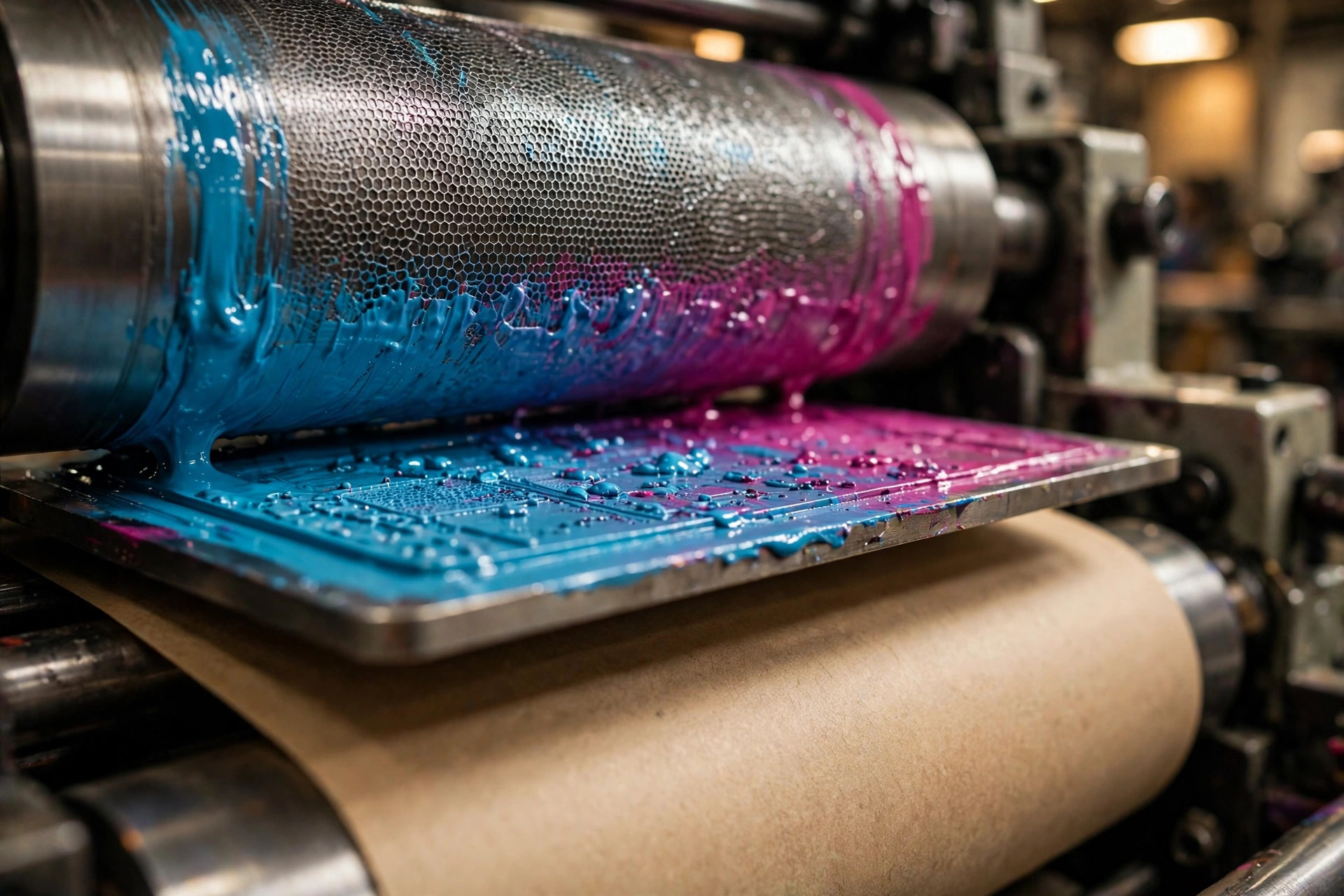
Then check converting. The coated film has to survive printing, lamination and heat sealing without losing barrier or adhesion. Most flexible packaging is printed on narrow-web flexographic printing presses, and the flexo ink and the coating have to get along — a coating that rejects ink or adhesive is a coating that fails on the line.
Then the processing conditions. Hot-fill, boiling or retort sterilization — retort pouches are heated to around 121°C — need coatings that tolerate heat and moisture without delaminating.
Finally, confirm compliance early. A barrier coating on food packaging has to meet food-contact rules for the market it sells in — FDA rules in the US, EU Regulation 1935/2004 in Europe — and the whole laminated structure has to comply, inks and adhesives included. Ask for migration test reports and a declaration of compliance before you qualify a supplier. Our guide to NIAS and food packaging ink explains what to check on the ink side.
Can a Barrier Coating Be Recyclable?
This is the question every brand owner asks now, and the honest answer is: it depends on the coating and the stream. A coating is a small part of the pack by weight, but it can decide whether the pack is recyclable.
Water-based coatings such as PVA and acrylic tend to be the friendlier option for paper recycling, because they don’t add a plastic layer that has to be separated. AlOx coatings are thin and non-metallic, so they are more forgiving in detection and sorting than a metallized layer. PVDC is the awkward one — its chlorine content makes recycling difficult, which is why brands are moving away from it even though it performs well.
The practical check is the recycling guideline for your market — in Europe, the 4evergreen Circularity by Design guideline distinguishes packaging that works in a conventional paper mill from packaging that needs a specialist process. Ask the film supplier which category their structure falls into, and get it in writing. A “recyclable barrier coating” claim without a stream behind it is just words.
And a word of caution: a coating can only do so much. If the product needs a very low OTR and a long shelf life, a mono-material pack with a coating may not reach it — and a pack that fails on the shelf wastes the food inside it too. Barrier first, recyclability second, in that order.
Frequently Asked Questions
What is the difference between a barrier coating and a barrier film?
A barrier coating is the functional layer that blocks permeation; a barrier film is the complete product — base substrate plus coating plus any surface treatment. AlOx-coated PET is a barrier film whose functional coating is aluminium oxide.
Can a transparent AlOx coating replace metallized film?
Yes, when transparency, microwave compatibility or metal-free detection is needed. But AlOx barrier performance is generally a little lower than a metallized layer, so the shelf-life target must be verified before substituting.
What do OTR and WVTR mean?
OTR is the volume of oxygen passing through one square metre of film per day; WVTR is the mass of water vapour doing the same. Lower numbers mean a better barrier. Compare values measured at the same temperature and humidity.
Are barrier-coated films safe for direct food contact?
Films made with approved materials and validated processes are safe when migration limits are met — ask the supplier for migration documentation for the whole laminated structure.
Can barrier coatings make packaging recyclable?
They help, by replacing plastic layers so a pack can be built from one polymer — but only if the coating itself suits the recycling stream.
What materials are used in narrow web flexible packaging?
Narrow-web flexo presses print films such as PET, BOPP and CPP, plus paper and foil, for pouches, sachets and labels. The barrier coating is usually applied to the same film before or after printing, depending on the structure.
About Triwill: Triwill Group supplies UV coatings and water-based coatings for flexible packaging, as well as printing inks, including flexo and gravure inks, and pressroom chemicals for commercial printers. Visit triwillgroup.com to learn more.