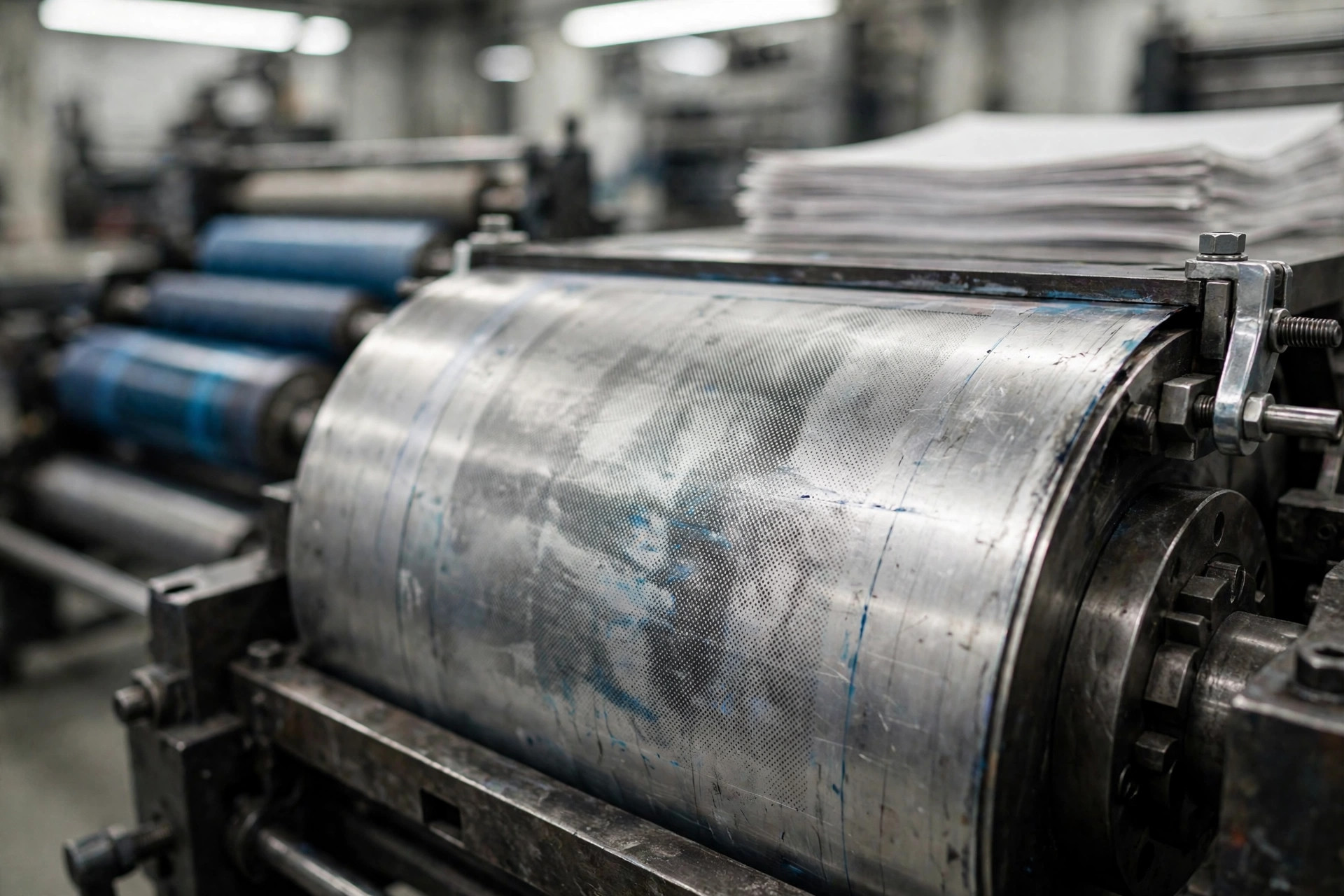
A printing plate is the flat surface that carries your artwork onto paper, board or film. Think of it as a stamp: the image sits on the plate, the plate picks up ink, and the press transfers that ink onto the sheet — thousands of times an hour, in exactly the same place.
Every job that runs on a plate-based press needs one plate per colour. A black-only job needs one plate. A full-colour job needs four, one each for cyan, magenta, yellow and black. Add a spot colour or a metallic ink and you add another plate — and most of what a plate costs and how long a job takes to set up.
What Is a Printing Plate?
A printing plate is the image carrier in a printing press. It holds the design in a form the press can repeat — the same image, the same position, the same ink coverage, sheet after sheet. Without it, every impression would have to be created from scratch — which is what digital printing does, and why digital suits short runs while plates suit long ones.
The trick is that only part of the plate carries ink. On an offset plate, the image areas attract ink and the rest repel it. On a flexo plate, the image stands raised like a rubber stamp and only the raised parts touch the sheet. On a gravure cylinder, tiny engraved cells hold the ink while the surface stays clean.
Plates come in several materials. Offset plates are usually thin aluminium. Flexo plates are photopolymer or rubber. Paper plates exist too — cheap, but only good for short runs with no tight colour work. And in screen printing, the “plate” is a mesh stretched over a frame.
How Does a Printing Plate Work on Press?
So how do printing plates work, exactly? First the plate is mounted on the plate cylinder, clamped tight and positioned so it rotates true. If it mounts even slightly off, every sheet in the run carries the same error, so operators check mounting before anything else. The plate has to return to exactly the same position on every rotation — that is what keeps your colours lined up.
Then the ink system feeds ink to the plate. In offset printing, rollers spread a thin film of ink and a little water across the plate; the ink sticks only to the image areas. The plate never touches the paper directly. It transfers the image to a rubber blanket cylinder, and the blanket presses it onto the sheet. That extra step is where “offset” gets its name.
Flexo works more directly. An anilox roller — a steel roller covered in tiny cells — meters a controlled amount of ink onto the raised image areas of the plate, and the plate presses straight onto the board. We covered the full process in our guide to flexographic printing, and the ink side of it in what flexo ink is and how it works. The plate compresses slightly at the point of contact, releases the ink, then springs back to shape as it rotates away.
Two things can go wrong here, and both trace back to the plate. Dot gain happens when the plate presses too hard, so printed dots come out bigger than designed. Registration drift happens when a plate stretches or mounts unevenly, so colours stop lining up.
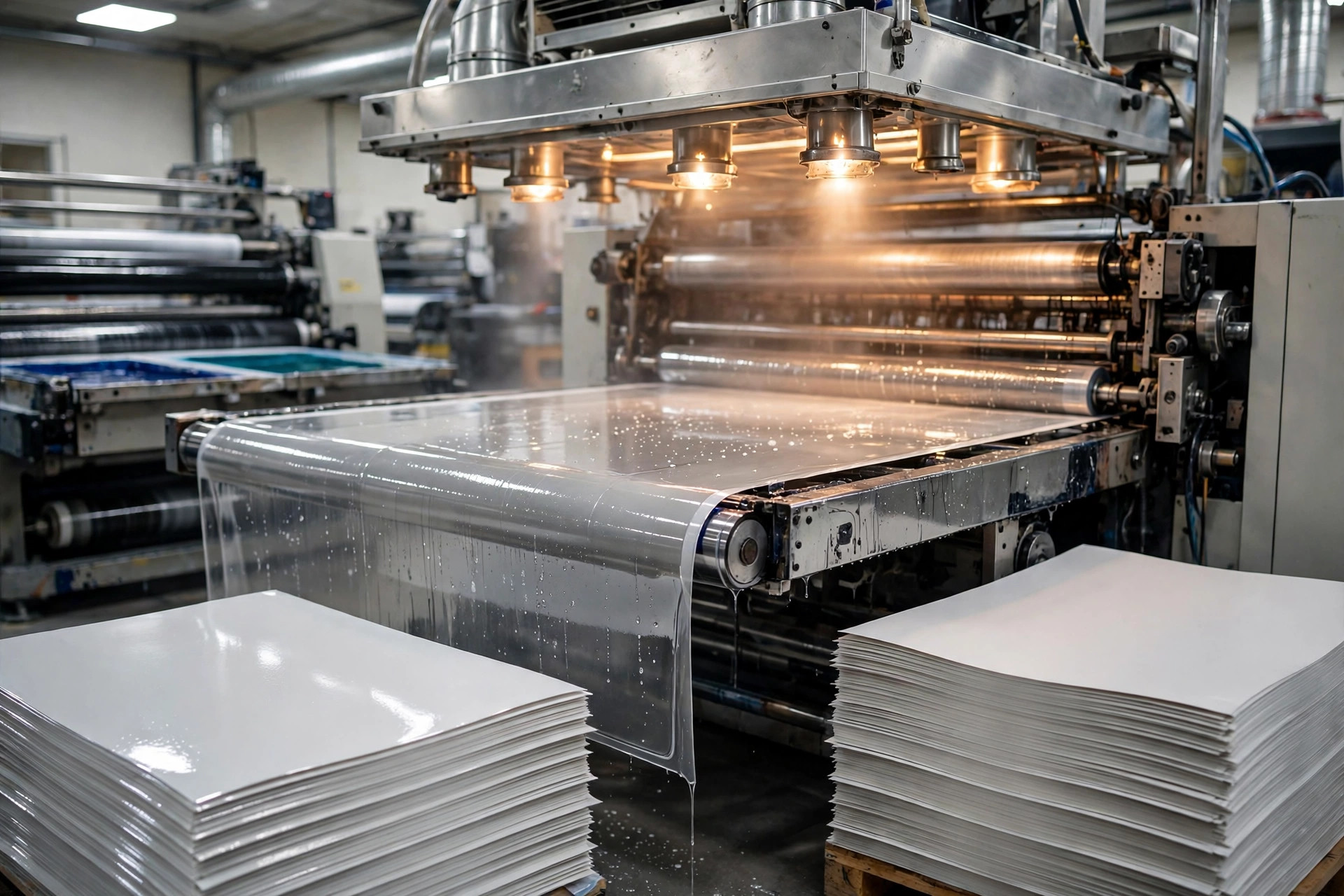
Once the last colour is down, the sheet may pass through a coating unit. A clear aqueous coating is often applied right on the press to protect the print from scuffs and fingerprints.
The Four Main Types of Printing Plates
Offset plates. A thin sheet of aluminium, coated so the image areas accept ink and the rest do not. They are flat — image and non-image areas sit on the same plane — which is why offset is called planographic printing. They hold the finest detail of any plate type, which is why brochures, books and high-end packaging still run offset. For the inks that run on them, see our conventional offset inks.
Flexo plates. Made from photopolymer or rubber, with the image raised above the surface. They bend, compress and recover, which lets them print on uneven surfaces like corrugated board and flexible film — surfaces a rigid metal plate could never follow. Rubber plates are the toughest and cheapest but hold the least fine detail. Flexo is the workhorse of packaging, and it runs on flexo and gravure inks.
Gravure plates — or rather, cylinders. Gravure rarely uses a flat plate at all. The image is engraved as tiny cells into a metal cylinder, the cells fill with ink, a blade wipes the surface clean, and the cylinder presses the ink straight onto the film or paper. It is expensive to set up and unbeatable for very long runs, where the cylinder’s cost disappears into the volume.
Screen plates. A fine mesh stretched over a frame, with a stencil blocking the areas that should stay blank. A squeegee pushes ink through the open mesh onto the fabric or board below. It is the oldest plate idea of the four and still the best for textiles and posters.
How Are Printing Plates Made?
Platemaking starts once the artwork is final. Prepress separates the design into one file per colour and adjusts it for the process — flexo artwork, for example, is compensated for how much the plate compresses on press. Most platemaking delays come from last-minute artwork changes, not from the plate process itself.
Most plates today are made by computer-to-plate, or CTP. A laser images the digital file straight onto the plate material — no film in between. For offset, a coated aluminium plate goes into the imagesetter and comes out ready to mount, often the same day or the next working day. For flexo, the photopolymer is exposed to light, then washed out so the unexposed material dissolves away and leaves the raised relief, then dried and cured. A standard flexo plate usually takes one to three working days.
Then comes inspection. The plate is checked for thickness, relief depth, surface uniformity and edge definition. A plate that cures unevenly or holds the wrong relief depth will print badly for the whole run.
Offset Plates vs Flexo Plates: How They Compare
Offset and flexo plates solve the same problem in opposite ways — the choice comes down to what you are printing on and how much of it.
Offset plates are flat, metal and precise. They hold the finest lines and the smoothest halftones, and they reproduce photographs better than any other plate type. But they are rigid. They need a smooth, even surface, and they print through a blanket, which adds a step and a cylinder to the press. They suit paper and board, long runs, and jobs where image quality is the first priority.
Flexo plates are soft, raised and forgiving. They follow uneven surfaces, print on film and corrugated board, and press straight onto the substrate without a blanket in between. They give up some fine detail, but they win on versatility and speed for packaging runs.
Cost follows the same split. An offset plate is relatively cheap to image but the press setup around it is heavier. A flexo plate costs more to make and takes longer — up to three days against offset’s same-day turnaround — but once it is on the press it runs fast and repeats well. Neither is “better” — the right plate matches the substrate, the run length and the detail the artwork demands.
How Long Does a Printing Plate Last — and How Do You Look After It?
A plate’s life is measured in impressions, not days. A flexo plate in corrugated work typically stays reliable for around 20 to 100 production runs, depending on the board, the ink, the pressure and how long each run is. Offset plates last longer in impressions, but a crease or a scratch on a thin aluminium plate is usually the end of it.
What wears a plate out? Three things: repeated compression, ink exposure and cleaning. Every rotation flexes the plate a little, ink dries on the surface if left sitting, and aggressive cleaning strips the surface faster than gentle cleaning does. The plate cleaned properly after every run and stored flat, cool and out of direct light will outlast the one wiped down with whatever solvent is nearest — and Triwill’s pressroom chemicals include cleaners made for exactly this job.
So when do you replace one? Watch the print, not the calendar. If dots are gaining or registration keeps drifting even after remounting, the plate is telling you it is done. Replacing it early costs one plate; running it too long costs waste, rework and a press stop mid-job.
Frequently Asked Questions
What is a printing plate used for?
It carries the artwork onto the substrate — the plate holds the image, picks up ink on the image areas only, and transfers it to paper, board or film as the press runs.
How many printing plates do I need for a job?
One per ink colour. A black-only job needs one plate; a full-colour CMYK job needs four; a spot colour or metallic ink adds another each. Each plate also needs its own ink — we showed how to calculate ink consumption for flexo and offset jobs.
What are printing plates made of?
Offset plates are thin aluminium. Flexo plates are photopolymer or rubber. Gravure uses an engraved metal cylinder instead of a flat plate, and screen printing uses a mesh stencil.
How are printing plates made?
Almost all plates today are made by computer-to-plate: a laser images the digital artwork directly onto the plate material. Flexo plates are then washed out, dried and cured to form the raised relief. Offset plates are ready the same day or the next working day; flexo plates take one to three.
Do digital printers use printing plates?
No. Digital printing transfers the image straight from file to substrate with no physical plate in between. That is why digital suits short runs and variable data — no plate to make, mount or pay for. The tradeoff is unit cost: at long run lengths, plates win.
Can a printing plate be reused?
Yes, if it is cleaned and stored properly. Flexo plates typically survive around 20 to 100 production runs. Store plates flat, clean and dry, away from light and heat, and check dot gain and registration before remounting.
About Triwill: Triwill Group supplies printing inks for commercial printers, including conventional offset inks and flexo and gravure inks, plus pressroom chemicals for plate cleaning and press care. Visit the Triwill Group home page to explore the full range.